On July 16th, I’m going to launch a new guide to the radical history of Norwich.
I’ll do this by leading a walk, part of the Norwich History Festival, and I’ll share copies of my guide.
I’ll also include the guide in a pop-up I’m running for Reimagine Norwich in the Aviva Community space at St Saviour’s Yard on 4–7 July. I want people to be inspired by our radical history to imagine different ways of living and to take action for the future.
Below I’m setting out some of the introductory material in this guide, and a few highlights of the radical people and places included.
Why was Norwich so radical?
Norwich has been a city of learning and literacy since the early Middle Ages. People travelled from long distances to study and live at its five monasteries and a convent. By the 12th century, there were 58 parish churches, 36 of them having anchorites’ cells attached.
The presence of religious institutions has not made it a beacon of peace and morality. There have been many incidents of violent oppression, such as Bishop de Tuberville’s ‘blood libel’ against Jews, Bishop le Despenser’s suppression of the Peasants’ Revolt, and the execution of Lollards. These oppressive events led to a counterculture of resistance in Norwich, which evolved into a relative tolerance of dissenters. By 1580, more than a third of the inhabitants were ‘free church’ or non-conformist.
Norwich nurtured a diversity of ideas and skills due to the influx of Jewish and Protestant traders and weavers from Europe. By the mid-1100s, it had one of the biggest Jewish communities in England. By the late 1500s, ‘The Strangers’ made up 40% of the population.
Norwich was a large city in the middle of a large rural area, so it was a gathering place for those resisting enclosure and unfair taxation. (e.g. Kett’s Rebellion).
In the 18th and 19th centuries, it had thousands of textile workers, mostly weavers of fine patterned cloths, who could vote and whose independence allowed them to protest for rights and reform. Many weavers were literate, reading books such as Thomas Paine’s Rights of Man.
Today, there are many people, study centres and groups working for social & environmental justice. See the Norwich Resilience Web.
There is more to do
Few cities have a richer heritage of reformers, dissenters and writers who have articulated injustices and alternative ways to organise society.
However, Norwich is not a utopia, unaffected by the world’s problems. Some grievances identified centuries ago continue today. Many people dream of safer and fairer ways, but struggle to enact change.
Norwich sits in a large farming county with a long history of elite wealth and exploitation of land, nature and working people. Norfolk politicians have mainly been conservative, and there is a rising hostility to migrants and refugees.
This means there is much to do, responding to the needs of today’s situation while following in the footsteps of past radicals.
Our current prospects for a safe, fair world are not great, as the most powerful people are harming and polluting the environment, exploiting people, waging war, and hoarding their profits on a huge scale. This is despite evidence from science and experience that we are in the midst of an Earth Crisis:
- The overshoot of the planet’s ecological boundaries
- The shortfall in meeting human needs equally.
Many of the radicals in Norwich history, if alive today, would argue that the powerful should be acting in the interests of future generations, of humans and all other species.
This doesn’t mean that we, ordinary people, have no power at all. Looking back in history, we can see how positive change starts with just a few people who act on their desire for justice.
Whatever you choose to do, know that the chances of success are much higher if you try than if you give up. And you are not alone — join in with others, and ask for their help.
Highlights
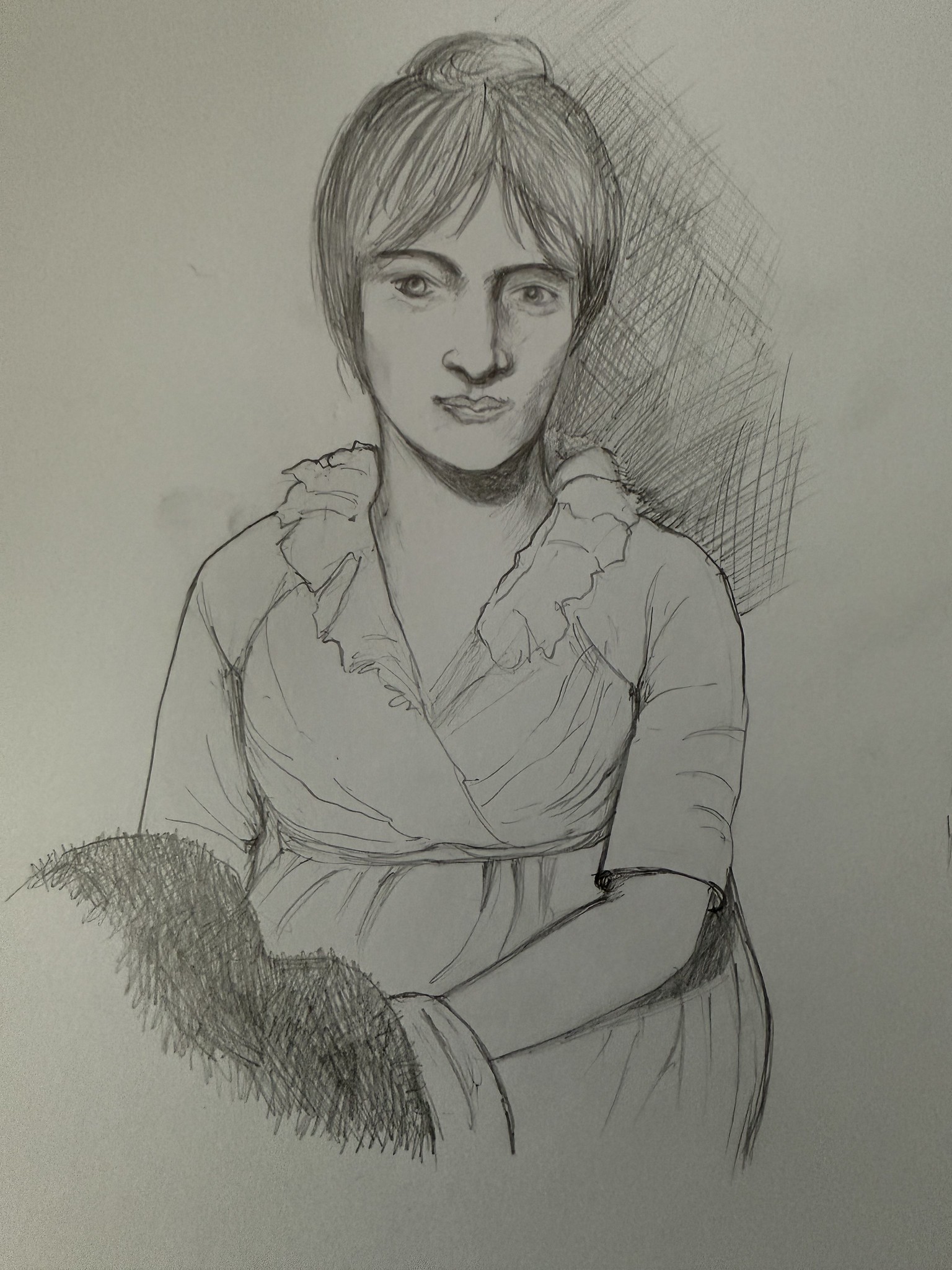
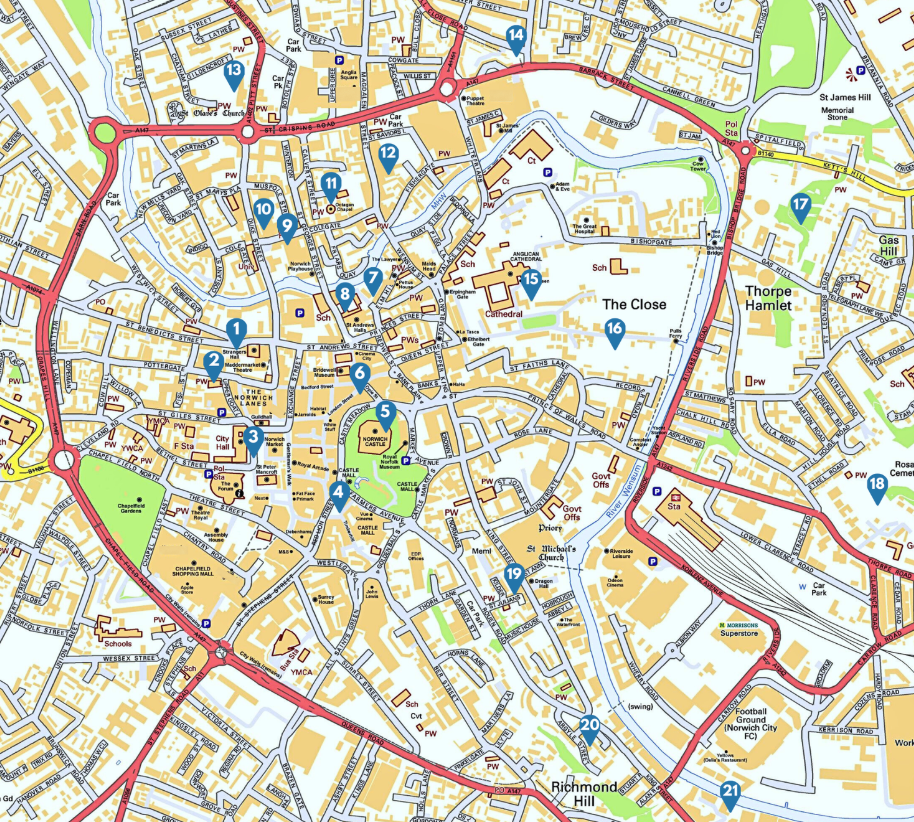
The guide has 33 radical people and places, supported by a map, stories, and some hand-drawn illustrations.
Here are just a few of the people I’ve included:
Dorothy Jewson, 1884–1964
A Norwich City Councillor, and the City’s first female MP (for Labour). Initially a teacher, she believed women should be educated to be able to work, to be politically active, and to be in control of their reproductive rights. She was responsible for the creation of several parks in Norwich. She also instigated road building, as it was seen as a way to create jobs. If she was a councillor today, would she focus on roads or parks?
Amelia Opie, 1769–1853
Amelia’s novels, songs and poems expressed radical ideas, including opposition to slavery. She married the portrait and history painter John Opie in 1798. Through her friend Mary Wollstonecraft, she was part of the Bluestocking Society. She was baptised in the Octagon Chapel as a Unitarian but became a Quaker and was buried in Gildencroft. She organised the Ladies Anti-Slavery Society in Norwich, with Anna Gurney, which boycotted shops selling slave trade goods. She was the first non-royal woman documented as speaking in public (in 1796).
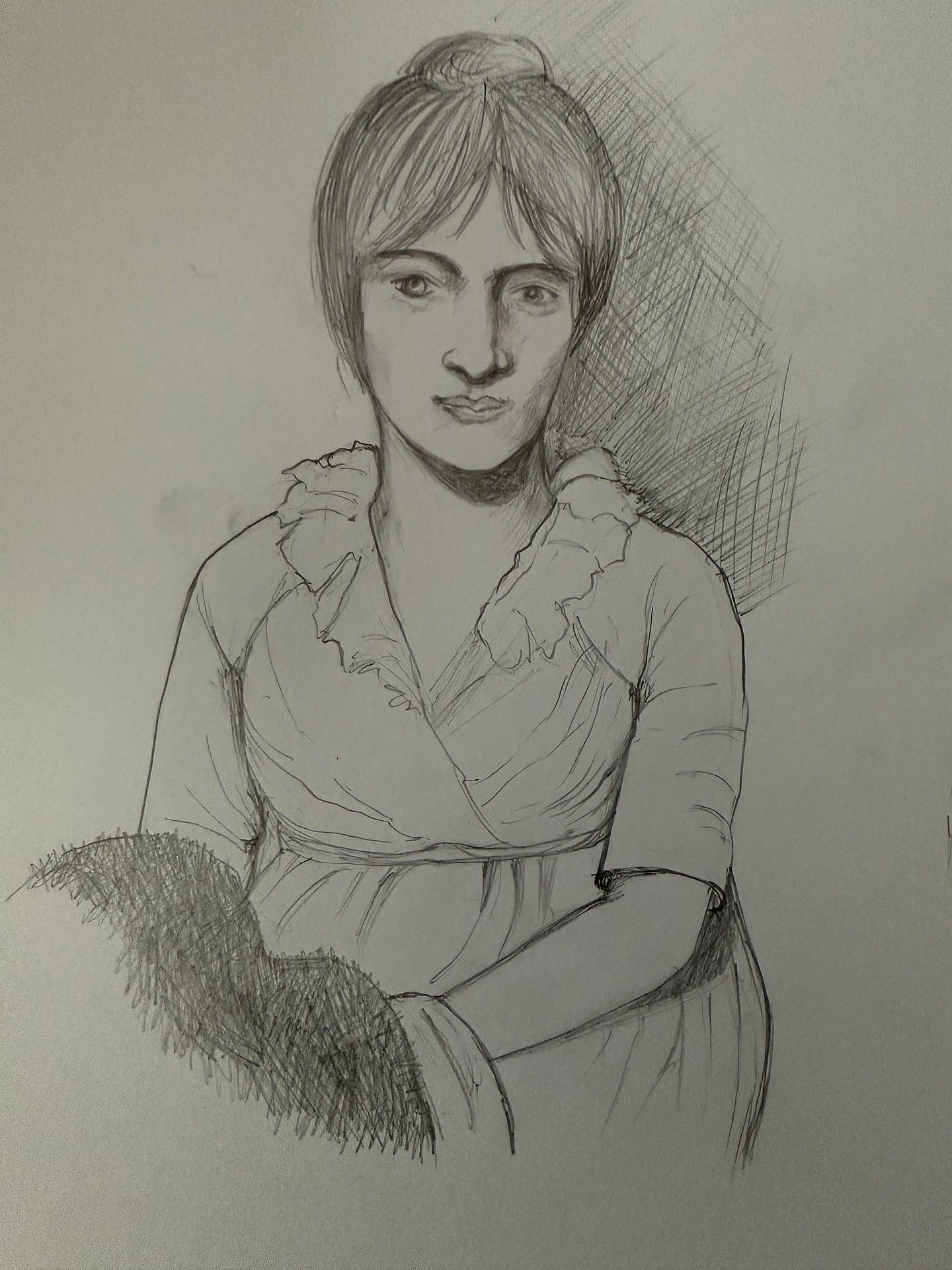
Harriet Martineau, 1802–1876
Her work (journals, books, 1,600 articles and translations) helped shape Victorian attitudes towards women’s rights and social justice. Writing allowed her to support her family after her father’s textile business collapsed. She travelled widely and was vocal in her criticisms of slavery and the treatment of women. Friendly with Darwin, she promoted secular ideas of the origins of life. She supported female reproductive rights to limit population growth and improve women’s lives. She also promoted environmental sustainability and nature-friendly living.
And ‘anonymous’
Thousands of unknown radicals turned up for union events, election hustings or protests. Writers, carers, makers and inventors made change more quietly by thinking and doing things differently.
This guide highlights people well-known for their voice, courage or difference. Many could only be known due to their privilege, giving them networks, education and leisure time. Some did overcome limits such as being female, gay or disabled. Some may not seem radical compared to our understanding today, or the needs of our global situation.
I’m available to lead tours where you can ‘walk in the shoes’ of some of the people from the guide. Each participant is briefed to discover one character and to bring their perspective along for a walk, discussing what they would do to solve social and environmental issues if they were alive today. To book a 90–120 minute tour for up to 15 people, contact Bridget on bridget.mckenzie@flowassociates.com